The best AI tools for small business in 2026: ChatGPT, Claude, Gemini and DeepSeek compared
A plain-English comparison of the main AI models in 2026: what they are, what they are good at and which one makes the most sense for a small business owner.
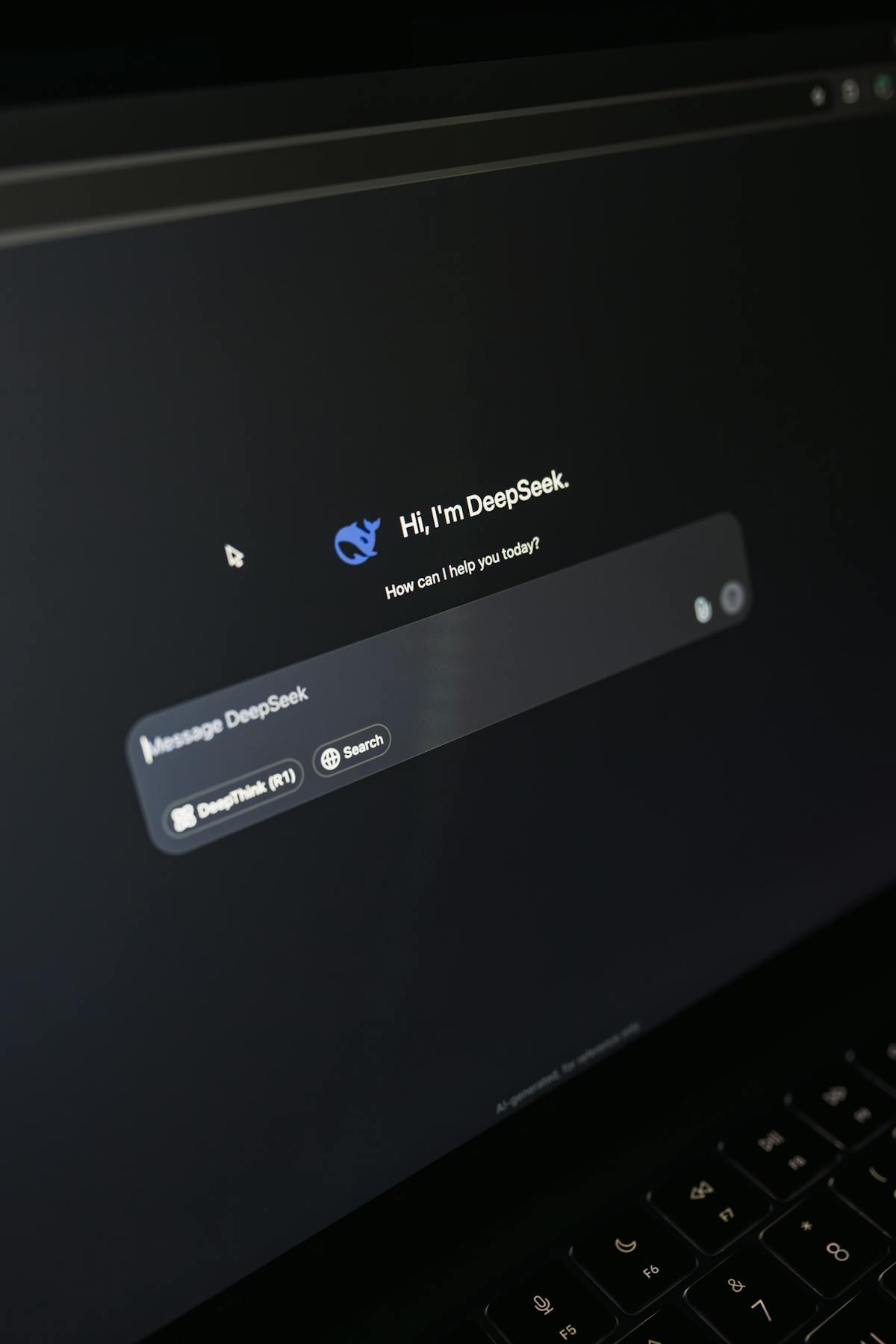
If you have tried to research AI tools lately, you will have noticed there is no shortage of options. ChatGPT, Claude, Gemini, DeepSeek, Grok, Mistral. The list keeps growing, and each one claims to be the best.
For a small business owner who just wants to save time, this is more confusing than helpful. So here is a plain-English breakdown of the main players, what they are good at and which one is worth your attention.
What we are comparing
These are the four models that come up most often for small business use in 2026:
- ChatGPT (OpenAI): the one most people have heard of
- Claude (Anthropic): the strongest model for complex thinking, writing and long tasks
- Gemini (Google): tightly integrated with Google Workspace
- DeepSeek: a Chinese model that punches well above its cost
We are not comparing every technical benchmark. We are asking: which one is useful when you are running a business on your own?
ChatGPT
ChatGPT is the most widely used AI tool in the world, which means it has the biggest ecosystem of third-party integrations, tutorials and support. The current flagship model (GPT-4o) handles most tasks well: drafting emails, summarising documents, answering questions, generating ideas.
Where it shines: Breadth. If you need a tool that can do a bit of everything, ChatGPT is the safest default. The plugin ecosystem is also the most mature. You can connect it to your calendar, CRM and other tools via third-party platforms like Zapier.
Where it falls short: It can be overconfident. It sometimes presents incorrect information with the same tone as correct information, which means you need to double-check anything factual. The free tier is increasingly limited.
Best for: General-purpose use, teams who want a widely supported tool, anyone who needs integrations with niche software.
Claude
Claude, made by Anthropic, is the model that consistently comes out on top for complex, thinking-heavy work. Where ChatGPT is broad, Claude is deep. It reasons through multi-step problems carefully, handles very long documents without losing the thread, and follows nuanced instructions in a way that feels less like prompting a tool and more like briefing a capable colleague.
The newer Claude models include extended thinking: the ability to work through a problem step by step before answering, rather than jumping straight to a response. For anything that requires judgment, not just pattern-matching, this matters.
Where it shines: Complex reasoning, long documents, and tone. Claude is the best choice for drafting proposals, analysing contracts, working through a tricky client situation or producing any output where quality and nuance matter. It can hold context across a very long conversation without drifting. It also produces the most natural-sounding writing of any model. If something needs to sound like you wrote it, Claude is the one to use.
It is also worth mentioning the broader Claude ecosystem. Tools like Claude Code sit directly on your machine and can create files, organise folders, write and run code and build entire applications from a plain-English brief. For a small business owner who wants AI that does things rather than just answers questions, this is a different category of useful. It is less “chat interface” and more “capable assistant that can actually operate your computer.”
Where it falls short: Fewer native integrations out of the box compared to ChatGPT. If you need a specific third-party app connected via a plugin marketplace, ChatGPT has more options today.
Best for: Service businesses and freelancers where the quality of communication is part of what you sell. Anyone dealing with complex tasks, long documents, or work that requires genuine judgment. Particularly powerful for anyone willing to go slightly beyond the basic chat interface.
Gemini
Google’s Gemini is the natural choice if your business runs on Google Workspace. It sits inside Gmail, Google Docs, and Google Calendar, which means it reads your emails directly, drafts replies in your voice, and add events to your diary without you switching between apps.
Where it shines: Google Workspace integration. If you live in Gmail and Google Docs, Gemini is the most frictionless option. No copy-pasting, no tab-switching.
Where it falls short: Outside of Google products, it is less versatile. The standalone model is not as strong as ChatGPT or Claude for general writing tasks.
Best for: Businesses already deep in the Google ecosystem. Anyone whose main bottleneck is Gmail and calendar management.
DeepSeek
DeepSeek is a Chinese-developed model that made waves in early 2025 by matching the performance of much more expensive models at a fraction of the cost. It is technically impressive and surprisingly capable for a free tool.
Where it shines: Cost. The free tier is genuinely useful, not crippled. For basic drafting, summarisation, and question-answering, it holds its own against paid competitors.
Where it falls short: Data privacy is a legitimate concern. DeepSeek is subject to Chinese data laws, which means your inputs could theoretically be accessed by the Chinese government. For anything involving client data, sensitive business information, or personal details, this is not a risk worth taking.
Best for: Low-stakes tasks where data privacy is not a concern. Testing AI without spending anything.
So which one should you use?
Here is the honest answer: for most small business owners, the model matters less than how you use it.
A well-configured Claude assistant that knows your business, your tone and your clients will outperform any raw ChatGPT session where you are starting from scratch every time. The difference between a useful AI tool and a frustrating one is almost never the underlying model. It is the setup.
| Model | Best use case | Free tier | UK data residency |
|---|---|---|---|
| ChatGPT | General purpose, broad integrations | Limited | No (US) |
| Claude | Complex reasoning, writing, long tasks | Yes | No (US) |
| Gemini | Google Workspace users | Yes | Yes (EU option) |
| DeepSeek | Low-stakes, cost-sensitive tasks | Generous | No (China) |
The setup problem
Every one of these models works as a blank slate by default. You open a new chat, explain your situation, ask your question, and get a generic answer. Close the tab and it forgets everything.
That is fine for a one-off question. It is not fine as a business tool.
What saves time is an assistant that already knows who you are: your clients, your tone, your standard responses, your calendar, your follow-up cadence. One that sits on WhatsApp or Slack, not buried in another browser tab you have to remember to open.
That is what Freehand does. We take whichever model suits your business — usually Claude or GPT-4o depending on your needs. We configure it properly. Connected to your inbox. Briefed on your business. Set up to run on the apps you already use.
The result is an assistant that works the way these tools are supposed to, rather than the way most people experience them.